The Hidden Struggle of Starting Over in Accra
Efua’s move to Accra reveals the loneliness, financial pressure, and family expectations that can complicate rural-to-urban migration.
“A city can be full of opportunity and still leave a newcomer wondering where she belongs.”
Efua left a small town in Ghana’s Central Region for Accra with one suitcase and her cousin’s telephone number. Everyone at home believed she was moving forward.
“Accra will open doors for you,” her aunt told her.
The city did open doors, but not the ones Efua expected.
The Reality Behind a City Address
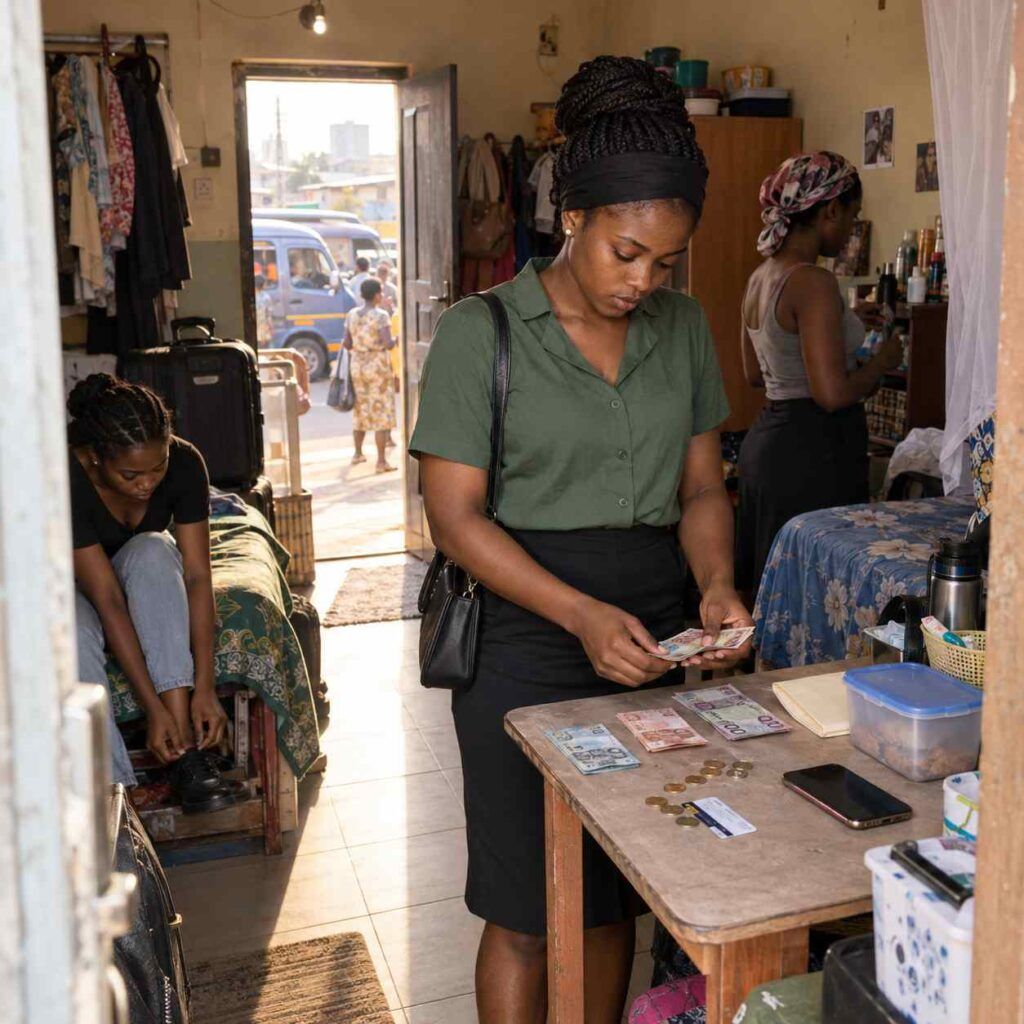
Efua found work in a shop and shared a single room with two other young women. She left early each morning to face Accra’s traffic and returned late, often too tired to speak.
Her salary sounded impressive to her relatives. After paying for rent, transportation, and food, however, there was little left for the requests that continued to arrive from home.
Whenever her mother called, Efua said, “Everything is fine.”
She never mentioned the nights she cried quietly. She also hid the embarrassment she felt when former classmates shared photographs of their progress online.
Rural-to-urban migration is often described as a simple move toward success. In reality, city life can bring overcrowded housing, unstable work, financial pressure, isolation, and constant comparison.
Efua missed living in a place where neighbors knew her family. In Accra, she could pass hundreds of people and still feel completely unknown.
Building Support and Setting Boundaries
Things began to change when Efua stopped treating loneliness as proof that she had made the wrong decision. She joined a church group near her workplace, started learning a practical skill on weekends, and prepared a budget based on her actual income rather than her family’s expectations.
She also stopped comparing the beginning of her journey with the polished lives she saw online. Some of the people she admired had family support, secure housing, or years of experience that could not be seen in a photograph. Comparison had turned someone else’s progress into a judgment against her own starting point.
Efua eventually told her mother the truth.
“I am working, but I am still establishing myself. I cannot send money every time someone asks.”
The conversation was uncomfortable, but it was necessary.
Preparing for More Than Employment
Moving from a town or village to a major African city requires more than finding work. Housing, transportation, safety, living expenses, and community support all matter. Opportunity without preparation can quickly become another form of struggle.
Families should also avoid assuming that a city address means financial comfort. Before making another request, ask how the person is adjusting and whether they need support themselves.
Efua’s story reminds us that progress is not always visible during the first few months. Sometimes courage means waking up in an unfamiliar room and continuing to build a life that does not yet feel like home.
Share her story with someone who is beginning again in a new city.
By Dr. David Rex Orgen, Best-Selling Author and International Mental Health Expert