Climate Change: A Crisis We Can No Longer Ignore
Climate change is already affecting Ghana and the world. Learn why urgent action from individuals, youth, governments, and businesses matters now.
Climate change is no longer a distant concern for scientists, policymakers, or environmental activists alone. It is already affecting our lives, our communities, and our future. Rising temperatures, unpredictable rainfall, destructive floods, long droughts, and coastal erosion are making the evidence harder to ignore. The question is no longer whether climate change is real, but what we are willing to do about it.
At its core, climate change refers to long-term shifts in the earth’s climate, largely driven by human activities. Burning fossil fuels, cutting down forests, industrial pollution, and unsustainable land use all increase greenhouse gases in the atmosphere. These gases trap heat and disturb the natural balance of the planet.
How Climate Change Affects Communities
The effects of climate change can be seen across the world, but developing countries are often among the most vulnerable. In Ghana, changing weather patterns are affecting farming communities, while floods continue to damage homes, businesses, roads, schools, hospitals, and other vital infrastructure. Along the coast, erosion is threatening livelihoods and forcing families to adjust to an uncertain future.
Climate change is not only an environmental issue. It is also an economic, social, and public health challenge. When drought or irregular rainfall causes crops to fail, food prices rise and household incomes suffer. When floods destroy infrastructure, entire communities feel the impact. Heatwaves also increase health risks, especially for children, older adults, and people with existing medical conditions.
The Role of Young People
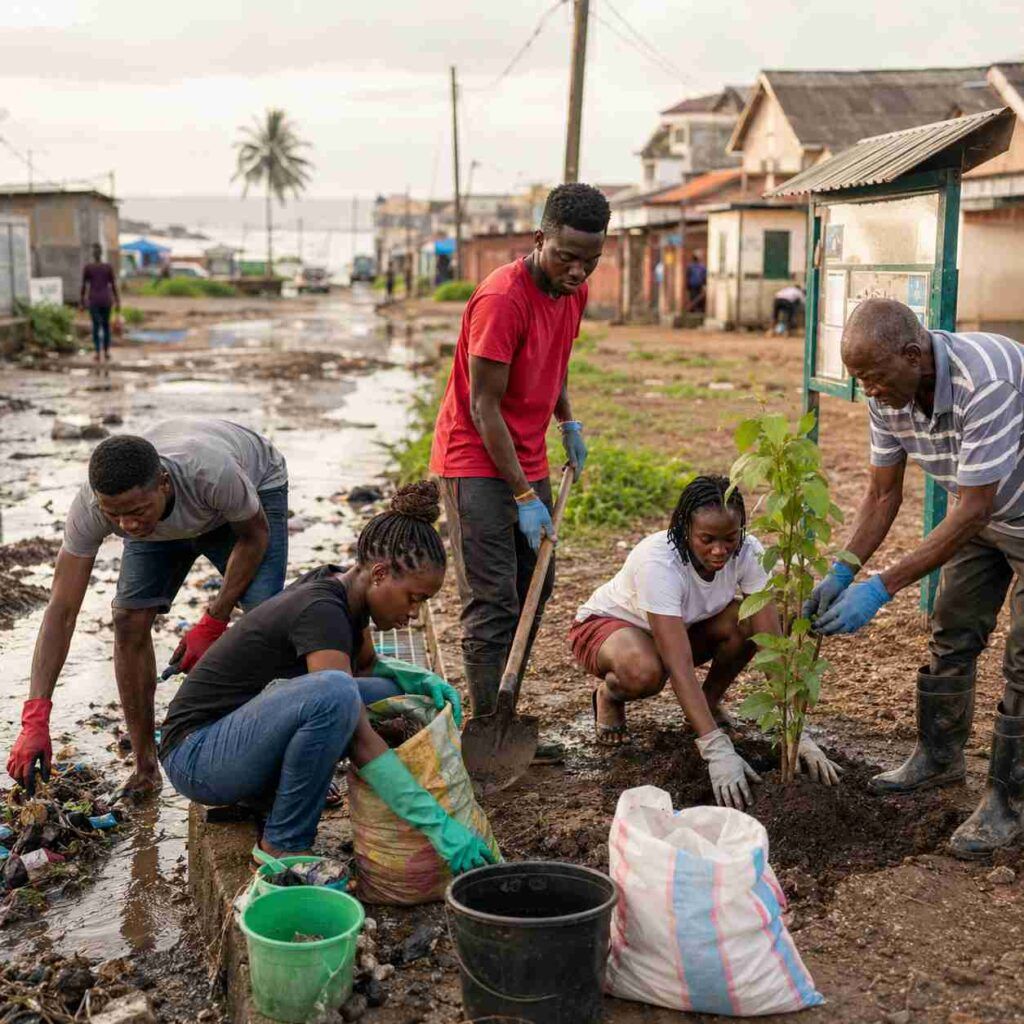
Young people have a powerful role to play. They are the generation that will live with the long-term consequences of today’s choices, but they are also well positioned to lead change. Across Africa and around the world, young people are organizing environmental campaigns, leading community clean-ups, planting trees, promoting sustainable lifestyles, and calling for stronger climate policies.
Their efforts show that age is not a barrier to meaningful impact.
Still, individual action alone is not enough. Governments must invest in climate-resilient infrastructure, strengthen environmental regulations, expand renewable energy, and support communities most exposed to climate-related disasters. Businesses must also adopt sustainable practices, reduce emissions, and embrace innovation that protects both the environment and economic growth. Schools and universities should integrate climate education into learning so students can gain the knowledge and skills needed to build a more sustainable future.
Every person can contribute in simple but meaningful ways. Conserving energy, reducing waste, planting trees, recycling where possible, protecting water resources, and making environmentally responsible choices may seem small. But when millions of people act together, these choices create real change.
Climate change is one of the defining challenges of our time, but it is also an opportunity to rethink how we live, produce, and consume. It calls for cooperation, innovation, and shared responsibility. Protecting the environment is not only the duty of governments or international organizations. It belongs to all of us.
The future of our planet depends on the choices we make today. Every action, no matter how small, helps shape the world future generations will inherit. The time to act is not tomorrow or next year. The time is now.
Written By Juanita Torto