Jean-Paul’s Key: Carrying Home After Displacement
Jean-Paul’s story reveals how displacement affects families and how routine, emotional support, and dignity can help rebuild a sense of home.
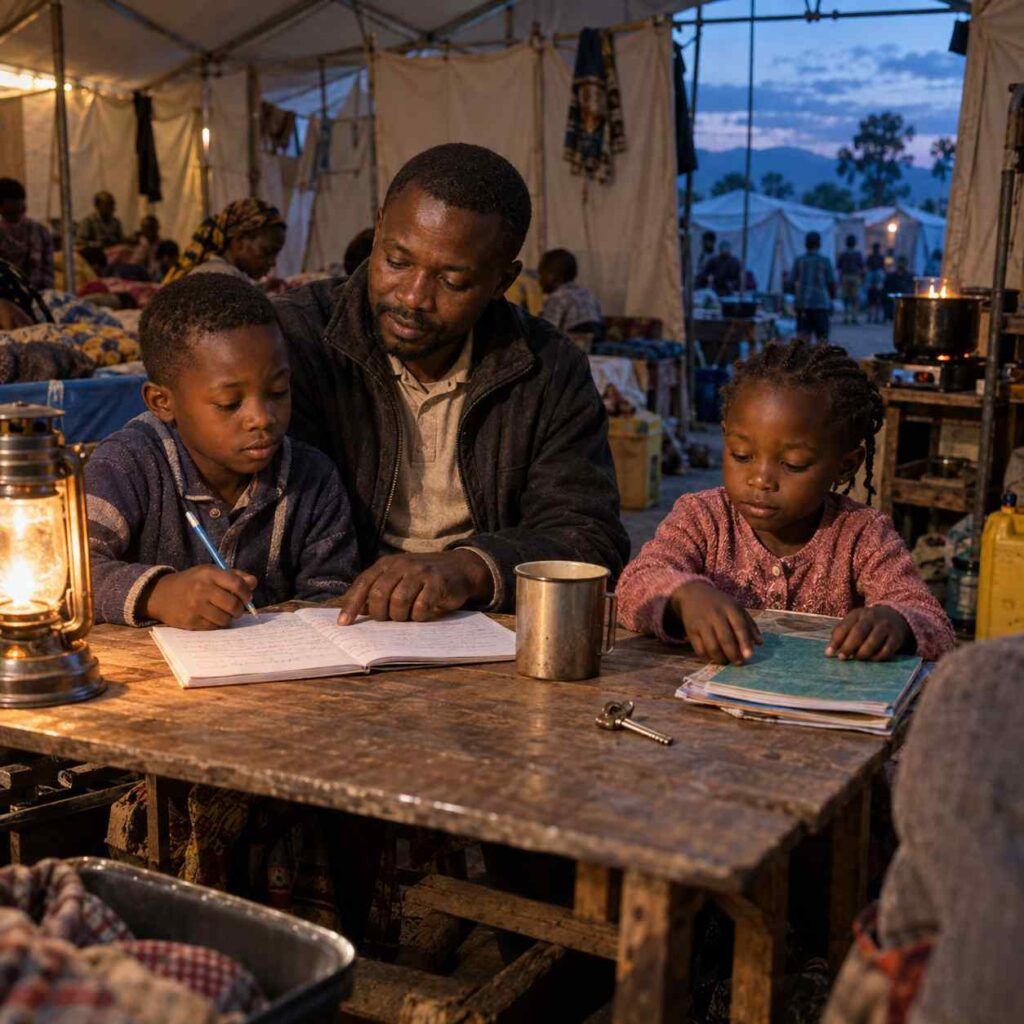
Jean-Paul kept an old key in his pocket after his family fled their home in eastern Democratic Republic of Congo. It could not open anything in the crowded place where they had found safety, yet he reached for it whenever uncertainty became overwhelming. It was the last physical connection to a familiar door and the life his family had been forced to leave behind.
Their departure had been sudden. Jean-Paul struggled to sleep, and unexpected sounds startled him. When his children asked when they would return home, he answered, “Soon,” even though he did not know whether that promise could be kept.
The Emotional Cost of Displacement
Forced displacement takes away far more than shelter. It can interrupt livelihoods, education, relationships, community ties, and the daily routines that help people feel secure. It can also unsettle a person’s sense of identity and belonging.
Jean-Paul believed he had to remain strong for his family. He concentrated on finding food and keeping everyone safe while ignoring his nightmares, anger, and exhaustion.
One evening, he shouted at his son for misplacing a cup. The fear on the child’s face made him realize how deeply his distress was affecting the family.
Jean-Paul later joined a support gathering organized within the displaced community. People exchanged practical information, but they also spoke openly about grief, fear, and the pressures of raising children amid uncertainty. For the first time, he saw that his emotional reactions were not a personal failure. They were responses to experiences that had overwhelmed his sense of safety.
Rebuilding Safety Through Routine
Jean-Paul began creating small, predictable routines for his family. Whenever possible, they ate at regular times. He arranged lessons for the children, established a time for evening prayer, and gave them honest explanations without making promises he could not guarantee.
These ordinary practices could not replace the home they had lost, but they helped restore a sense of stability.
He also learned that children often communicate distress through behavior rather than words. Clinging, anger, bed-wetting, silence, and difficulty concentrating are not always signs of disobedience. They may be a child’s response to a world that has suddenly become frightening and unpredictable.
Understanding this helped Jean-Paul respond to his children with greater patience. It also allowed the family to begin rebuilding trust within the life they now had.
Home Is More Than a Building
The key remained in Jean-Paul’s pocket, but its meaning gradually changed. It was no longer only a symbol of returning to a particular house. It reminded him that home was also found in relationships, shared stories, familiar practices, and the dignity his family carried with them.
Supporting displaced people requires more than meeting material needs. Food, clean water, shelter, and physical safety are essential, but so are privacy, reliable information, education, participation, and emotional support. People should not be reduced to what they lack or what others must provide for them.
For anyone who has experienced displacement, distress after danger is not evidence of weakness. Trustworthy support can be especially important when fear, sleeplessness, anger, or hopelessness begins to interfere with daily life.
Jean-Paul’s story shows that losing access to a house does not mean losing everything that made it a home. Sometimes resilience begins with one dependable meal, one honest conversation, one evening prayer, or one predictable corner of life in the middle of uncertainty.
By Dr. David Rex Orgen, Best-Selling Author and International Mental Health Expert